
Pulls, Knobs, or Handles? A Kitchen Cabinet Hardware Guide for Glendora Homeowners
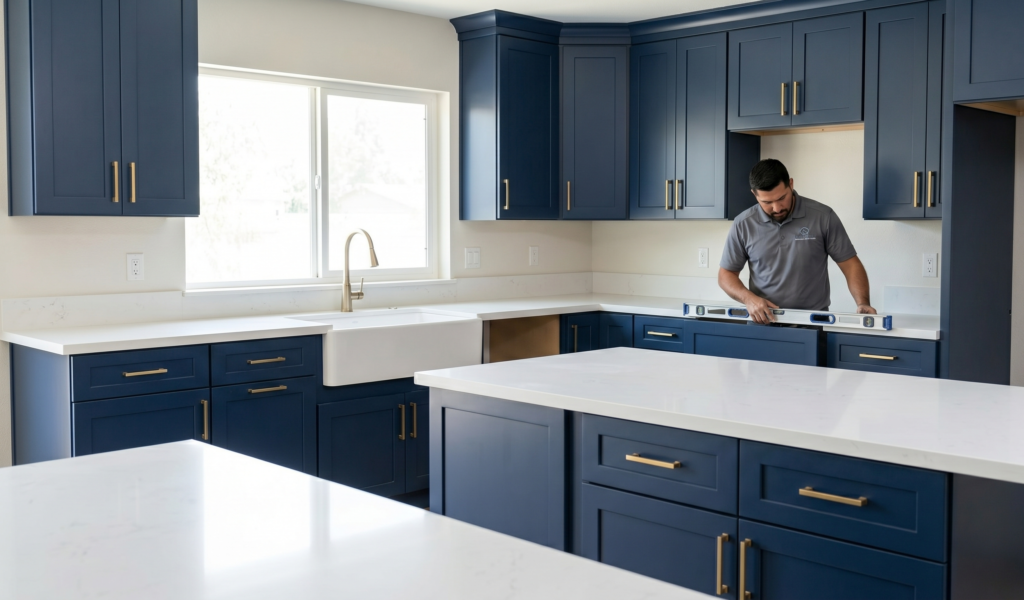
Cabinet hardware is the last decision most homeowners make and often the one they’re least prepared for. You’ve spent months choosing cabinets, countertops, and flooring — and then suddenly you’re standing in an aisle of pulls and knobs trying to decide whether brushed nickel or matte black is going to ruin everything.
It doesn’t have to be that complicated. Here’s how to think through it.
Pulls vs. Knobs: What’s the Actual Difference?
Knobs attach with a single screw. They’re compact, traditional, and work well on cabinet doors. The trade-off is that a single point of contact gives you less grip — fine for opening a door, less ideal for a heavy drawer.
Pulls attach with two screws and give you more surface to grab. They’re better for drawers and for any cabinet that gets heavy daily use. They also tend to read as more modern, though that depends entirely on the style you choose.
Bar and cup pulls are common in both Shaker-style kitchens and contemporary designs. Bin pulls and ring pulls lean more traditional. Elongated tab pulls feel minimal and clean in flat-panel kitchens.
Many Glendora kitchens mix both: knobs on upper cabinet doors, pulls on lower drawers. That’s a practical choice that also happens to look intentional.
Sizing: The Part People Get Wrong
Hardware that’s too small on a large door looks like an afterthought. Hardware that’s too big on a narrow drawer looks clumsy. Here are the ranges that work most reliably:
- Standard upper cabinet doors: 1.25″ knobs or 3″–3.75″ pulls
- Base cabinet doors: 1.25″–1.5″ knobs or 3.75″–5″ pulls
- Drawer fronts (standard): 3″–5″ pulls
- Wide drawers (30″+): 6″–8″ bar pulls, or two pulls centered symmetrically
- Pantry or appliance garage doors: 6″–12″ pulls for a comfortable, proportional grip
When in doubt, go slightly larger than your instinct. Hardware tends to look smaller on an installed cabinet than it does in your hand.
Finish Options and What They Work With
Matte black has been the dominant finish in Southern California kitchens for the past few years and continues to be strong in 2026. It contrasts well with white, cream, and warm wood tones. It also hides fingerprints better than most people expect.
Brushed nickel and satin nickel are the safe, timeless choices. They work with nearly every cabinet color and don’t polarize buyers the way bolder finishes can — a relevant consideration if you’re planning to sell.
Unlacquered brass and warm gold pair well with greens, navies, and darker cabinet colors. They warm up a kitchen that might otherwise feel too cool or sterile.
Brushed gold and champagne bronze split the difference — warmer than nickel but more understated than polished brass. Popular in transitional Glendora kitchens that blend classic and contemporary elements.
Chrome is durable and easy to clean but tends to read as older or commercial. It works in industrial-style kitchens but can look dated in anything warmer.
A simple rule: your hardware finish doesn’t need to match your faucet exactly, but it should be in the same family. Mixing a polished chrome faucet with matte black pulls throughout the rest of the kitchen creates visual friction.
Style Matching: How to Choose for Your Kitchen
Shaker cabinets are versatile enough to take almost any hardware. Matte black bar pulls are clean and contemporary. Oil-rubbed bronze or bin pulls push them more traditional. That range is exactly what makes Shaker the most popular door style in the Valley.
Flat-panel (slab) cabinets look best with minimal hardware — thin bar pulls, integrated channels, or edge pulls. Heavy decorative hardware competes with the clean geometry of the door.
Raised-panel and beaded-inset cabinets are more traditional by design. They pair naturally with cup pulls, ring pulls, and knob-and-pull combinations that echo older cabinetry styles.
Two-tone kitchens can carry two hardware finishes if done deliberately — for example, brass on the island and matte black on the perimeter. Do this only if your countertop or backsplash bridges the two finishes visually. Otherwise, keep hardware consistent across both colors.
A Note on Soft-Close Mechanisms
Hardware is what you see. Soft-close hinges and drawer slides are what you feel. Both matter.
Soft-close mechanisms prevent slamming, extend the life of your cabinet boxes and doors, and become one of those things you notice every single day — in the best way. If you’re investing in quality cabinets, soft-close should be standard, not an upgrade you skip.
Getting Hardware Right the First Time
The easiest way to avoid a hardware mistake is to bring samples into the actual kitchen before committing. Order one or two options, hold them against your cabinet door in your lighting, and live with them for a day. What looks right in a showroom or on a phone screen often reads differently at home.
If you’re planning new custom kitchen cabinets or a full cabinet replacement, we’ll help you walk through hardware choices as part of the design process — so nothing ends up as an afterthought. Call (818) 568-5032 or contact us to get started.